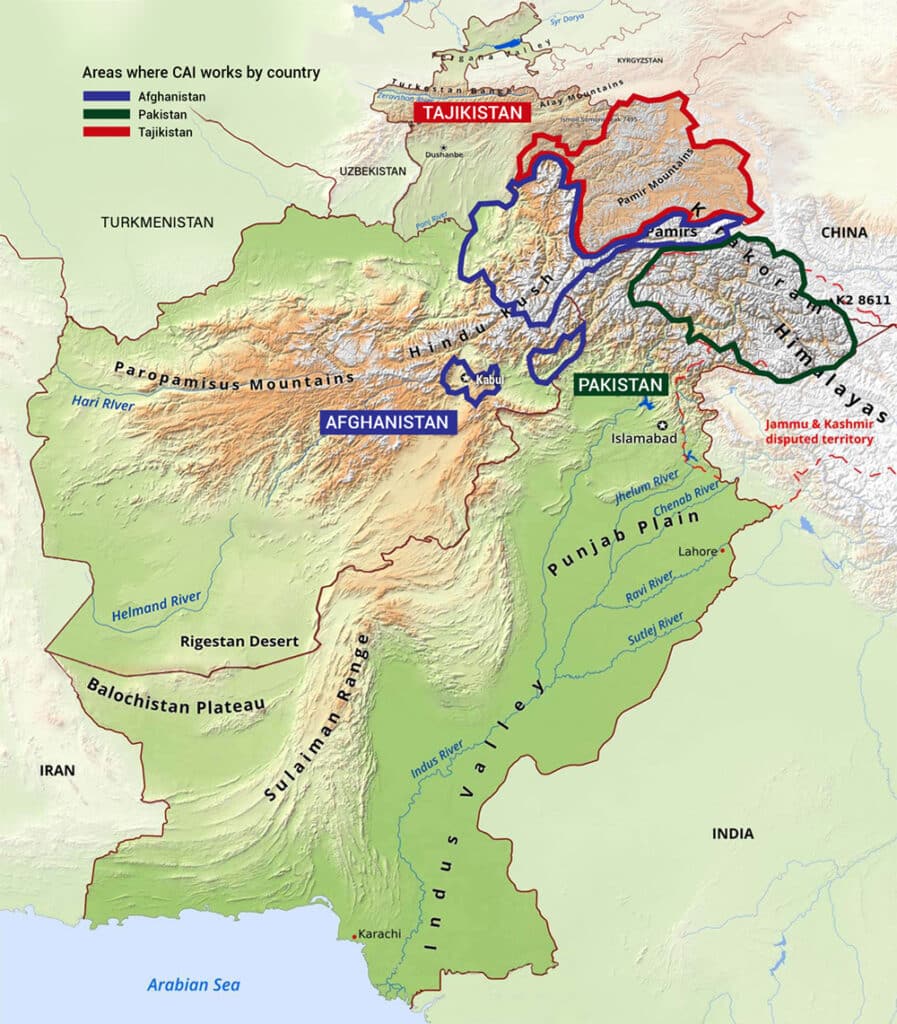
High in the mountains, where Afghanistan, Pakistan, and Tajikistan meet, lies one of the most breathtaking and challenging regions on Earth. Though now divided by modern borders, the areas of Gorno-Badakhshan in Tajikistan, Badakhshan in Afghanistan, and Gilgit-Baltistan in Pakistan—collectively nicknamed “the roof of the world”— share a rich and intertwined history.
For centuries, these corridors formed a single mountain world. They were linked by trade routes, scholarship, and spiritual traditions. Over time, imperial powers drew new borders across old pathways, separating communities that had long shared culture, language, and faith. Today, the region—divided among three nations—remains home to resilient communities bound by a collective resolve to overcome isolation and poverty.
Life in these remote mountain communities is shaped by both beauty and hardship. Long, harsh winters render roads impassable for months at a time. Telecommunications and internet access are unreliable or entirely absent. Government services frequently fail to reach the families who need them most. News, markets, and opportunities that others take for granted often remain out of reach.
In recent years, these challenges have been compounded by new regional pressures, including geopolitical tensions and climate change. These forces add new layers of uncertainty to isolated communities already striving to build a more stable and prosperous future.
Central Asia Institute was founded in this region, and our commitment to it has never wavered. We work closely with local partners to expand access to quality education, train teachers, and empower budding women entrepreneurs. We help ensure that even in the most remote valleys, every child and every woman can learn. In doing so, they transform not only their own lives, but also the futures of their families, their communities, and their nations.