
By Alice Thomas, Executive Director, Central Asia Institute
On May 14, the Taliban published a decree that effectively validates child marriage in Afghanistan. Decree No. 18, “Code on the Judicial Separation of Spouses,” doesn’t explicitly state that child marriage is permissible or include a minimum age for marriage. It does, however, include a provision on how child marriages can be annulled once a girl reaches puberty. Even then, according to the decree, a girl’s silence is to be interpreted as consent. The effect of the law is not only to legalize child marriage but to normalize it as well.
The decree is the latest in a string of increasingly severe pronouncements stripping away the fundamental rights of women issued by the Taliban since it seized power five years ago. In 2022, the group took its first step by refusing to reopen secondary schools for girls effectively barring them from education above Grade 6. Shortly thereafter, women were banned from universities. Since then, the de facto authorities have published more than 130 decrees denying women and girls of the most basic human rights including to education, work, healthcare, and freedom of movement, thereby creating a system that the United Nations and human rights organizations describe as gender persecution and gender apartheid.
Decree No. 18 further compounds the existing inequalities women face by imposing judicial barriers that make it harder for them to divorce and further undermining women’s agency in marriage, separation, and access to justice.
What is even more alarming is the harm to which it exposes girls forced to marry. International bodies including UNICEF, the Office of the High Commissioner for Human Rights, the Committee on the Rights of the Child, and the World Health Organization have all recognized that child marriage denies children—especially girls—of their safety, health, education, autonomy, and equal opportunities and exposes them to domestic and sexual violence, forced or early pregnancy, psychologic harm, exploitation and abuse.
I am reminded of the words attributed to the Prophet Muhammad in a hadith: “He is not one of us who does not have mercy upon our young.”
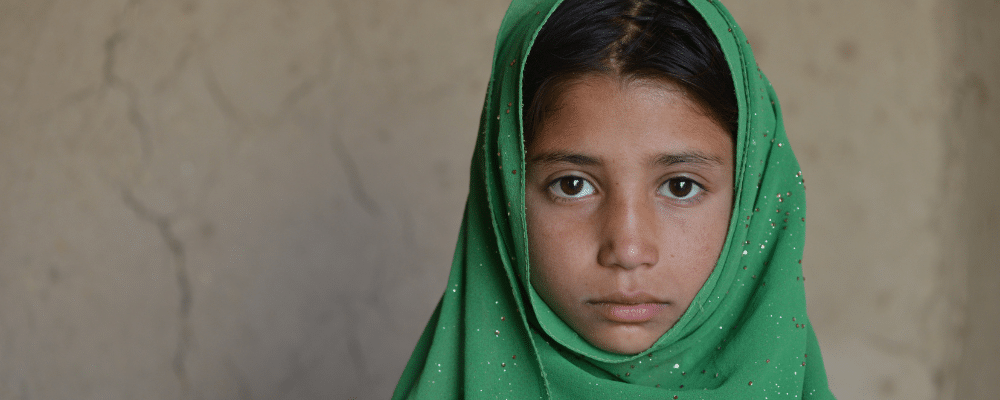
Imagine pulling a child who is, let’s say, a young girl of 9 or 10 years of age from her family and forcing her to marry a man 10, 20, even 30 years her senior. Unless she officially objects to a court, the law takes her silence as consent. I can’t imagine anything darker, more unmerciful, or more terrifying.
Many of us feel helpless to fight the de facto authorities half a world away who rule cruelly, illegitimately, and without humanity. But rather than turning away, we must proclaim our solidarity with Afghan women and girls. We must share our outrage with our families, friends, neighbors, and elected leaders. We must support organizations that support and uplift Afghan women and girls through advocacy, education, economic opportunities, and other services.
When we stand up for Afghan women and girls, we stand up against misogynistic governments everywhere and for the universal human rights of women everywhere. Don’t allow your silence to be taken as your consent.
Alice Thomas is Central Asia Institute’s Executive Director.
Sources:
United Nations Assistance Mission in Afghanistan (UNAMA). (2026, June 1). UNAMA Statement on Afghanistan’s De Facto Authorities’ Decree No. 18 “Code on Judicial Separation of Spouses”. Retrieved from https://unama.unmissions.org/en/news/unama-statement-on-afghanistans-de-facto-authorities-decree-no-18-code-on-judicial.
UN OHCHR Press Release. (2024, February 20). Gender apartheid must be recognised as a crime against humanity, UN experts say. Retrieved from https://www.ohchr.org/en/press-releases/2024/02/gender-apartheid-must-be-recognised-crime-against-humanity-un-experts-say.
UN Women. (2026, May 26). UN Women Afghanistan statement on Decree No. 18 issued by the de facto authorities. Retrieved from https://www.unwomen.org/en/news-stories/statement/2026/05/un-women-afghanistan-statement-on-decree-no-18-issued-by-the-de-facto-authorities.