

Why her empowerment benefits everyone.
By Alice Thomas
Central Asia Institute’s mission has long been to promote education as a pathway to opportunity. Since our founding nearly 30 years ago, we have provided countless males and females with education, job skills, and the agency to live a better life.
Leveling the Playing Field for Girls
While all children in the remote regions of Afghanistan, Pakistan, and Tajikistan that we serve face barriers to learning, girls are particularly disadvantaged. Even when enrolled in school, girls are far more likely than boys to drop out due to poverty, early marriage, safety concerns, or deeply rooted social norms that prioritize boys’ education and confine girls to domestic roles. That’s why our education programs have a special focus not just on matriculation for girls, but also on ensuring they stay in class, thrive, and succeed—helping to level the playing field for those who face the steepest uphill climb.
At its core, CAI’s mission is about creating equal access to education for all children. Most of our beneficiaries are girls—upwards of 60%—because they have unequal access to education in the communities we serve. This focus on females has an added benefit that stems from the transformative power of girls’ education to catalyze far wider positive change.
Education Transforms a Girl’s Life
Why Her Empowerment Benefits Everyone
When a girl is educated, the impact goes far beyond the walls of a classroom or the pages of a textbook. Educating a girl creates a powerful ripple effect that touches families, communities, economies, and future generations. It’s not just an investment in one life—it’s a multiplier of opportunity and progress for society at large.
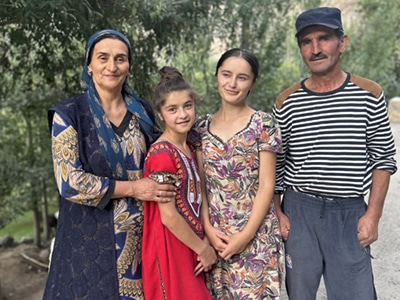
Families Flourish When Girls Learn
Communities Grow Stronger; Nations, More Prosperous; The World, More Stable
The benefits of girls’ education ripple out into the broader community. When more girls go to school, communities become safer, more equitable, and more prosperous. Literacy and numeracy improve public health outcomes and contribute to lower crime rates. Educated women are more likely to participate in civic life and leadership, helping shape policies that reflect the needs of entire populations—not just the privileged few.
What’s more, educated girls from rural and marginalized areas often return home to give back to their communities by becoming teachers, nurses, and even entrepreneurs. They serve as role models and disrupt cycles of poverty and discrimination that may have persisted for generations.
On a macroeconomic level, educating girls boosts GDP and strengthens economies. Closing gender gaps in education could generate an additional $112 to $152 billion in global GDP annually4. Countries with higher levels of female education tend to enjoy greater political stability, better health outcomes, and a faster path to financial prosperity.
Educated girls also help address global challenges like population growth and climate change, because girls who stay in school are more likely to have fewer children, later in life, which improves maternal and child health and allows communities to better manage limited resources. Project Drawdown ranks educating girls among the top 10 solutions to climate change because of its significance as a catalyst to action5.