

What It Costs the World When Women & Girls Are Denied the Chance to Learn & Earn
by Emilie Saunders
The cow arrived in the autumn of 2025. By any conventional measure, it was a modest investment: one dairy cow and her calf, delivered to a farming family in Farhad, a remote village tucked high in the mountains of Badakhshan, Afghanistan.
The family had seven children and a harvest that was failing. Rain had become unpredictable, then scarce, and a household whose livelihood depended entirely on the land was watching that land yield less with every passing season.
Their daughter, Husna, was 20 years old. Months earlier, the accelerated learning program she had joined to make up for years of missed schooling had been shuttered.
She continued anyway.
Alone at home, she studied with whatever materials she could find. No teacher. No classmates. No clear reason to believe her efforts would ever lead anywhere.
Then came the cow.
What happened next is what economists call human capital formation. The rest of us might simply call it determination. Husna began producing milk, yogurt, and qaimaq — the thick cream that sits on Afghan tables at breakfast. Her family ate first. What was left, she sold. Nothing was wasted; even the manure went to the fields or to market.
And she began saving money.
With disciplined persistence, Husna accumulated enough capital to open a small shop. Today, she runs the shop alongside her younger sister, selling their dairy products as well as eggs and household essentials.
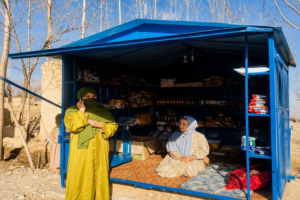
“This support {from CAI} did not just give us a cow,” she says. “It gave us a new life.”
Her story points to a larger question. How many Husnas are there across South and Central Asia, women with the talent, discipline, and ambition to transform a single opportunity into a livelihood, a business, even a future, but who never receive that opportunity? How many never gain access to the classroom, the loan, the livestock, or the chance to prove what they can do?
And what does the world forfeit when they don’t? The answer, researchers have found, is staggering. It stretches into the trillions.
The $30 Trillion Question
In 2018, the World Bank published “Missed Opportunities: The High Cost of Not Educating Girls.” Its central finding was striking: failing to ensure girls complete 12 years of education costs countries between $15 trillion and $30 trillion in lost lifetime productivity and earnings.¹
For perspective, $30 trillion exceeds the annual economic output of the United States.
The reasons are straightforward. Education increases earning potential at every stage of life. Research shows that even preschool and primary education are associated with higher lifetime earnings, while women who complete secondary school are more likely to participate in the workforce and can earn nearly twice as much as those who do not.²
The benefits extend far beyond individual students. Educated women are more likely to invest in their families, support their children’s education, participate in their communities, and contribute to stronger local economies. When multiplied across the roughly 130 million girls worldwide who are currently out of school, the economic consequences become enormous.
Yet the true cost of exclusion cannot be measured in dollars alone. Behind every estimate is a girl whose education was interrupted, delayed, or never begun. In the three countries where CAI works — Afghanistan, Pakistan and Tajikistan — the barriers facing women and girls vary widely. Some are political. Others are economic, geographic, or social. But all carry a similar consequence: fewer opportunities for women, weaker outcomes for families, and a loss of talent and potential that affects entire communities for generations.
Afghanistan: Exclusion by Decree
Benefsha was nineteen when Afghanistan’s government fell.
She is 25 now, a mother of two, and has spent the entire span of the Taliban’s return teaching fifth grade in a village outside Kabul. When her husband proposed they start a business together to raise the family’s income, she turned him down and stayed in the classroom.
“She chose to remain in education, because she believed teaching children was her true calling,” Benefsha’s husband says. “I have seen the positive impact she has made in the lives of so many children.”
Benefsha is one of a shrinking number of women still able to serve as role models for the next generation of Afghan girls.
Afghanistan remains the only country in the world where girls and women are barred from secondary and higher education.³ As a result, more than 2.2 million adolescent girls are currently out of school.⁴ In April 2026, UNICEF estimated that these restrictions are already costing Afghanistan approximately $84 million annually, roughly half a percent of the country’s GDP.⁵
But the true cost cannot be measured in dollars alone. Education systems depend on continuity: today’s students become tomorrow’s teachers, nurses, doctors, and community leaders. When girls are prevented from continuing their education, that pipeline begins to break down. UNICEF projects that by 2030 Afghanistan could lose up to 20,000 women teachers and 5,400 health workers, professionals whose absence will be felt in classrooms, clinics, and communities across the country.⁶ Already, the number of women teaching in basic education has fallen by more than 9%, from nearly 73,000 in 2022 to around 66,000 in 2024.⁷
Which brings us back to Benefsha. In a country that segregates classrooms, a girl who has no woman to teach her has no teacher at all. Every woman who leaves the profession closes a door behind her.
Yet there is reason for hope. More than nine in 10 Afghans support girls’ secondary education.⁸ The ban reflects the policies of the Taliban, not the aspirations of the Afghan people. It is also why community-based education programs remain so important. Where learning opportunities still exist, families continue to embrace them. Parents keep sending their daughters to class, teachers like Benefsha keep showing up, and communities continue investing in their children’s futures despite the obstacles placed in their way.
Pakistan: Exclusion by Neglect
Between 25 and 26 million Pakistani children are out of school, roughly 38% of all school-age children. In Balochistan, three out of four girls do not attend school at all.⁹ Although the government declared an education emergency in 2024, public spending on education moved in the opposite direction, falling to approximately 0.8% of GDP, a historic low.¹⁰
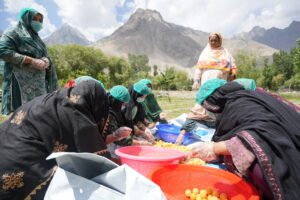
The consequences ripple far beyond the classroom. An estimated 19 million Pakistani girls are married before the age of 18.¹¹ Research suggests that each additional year of secondary education reduces a girl’s likelihood of child marriage by roughly six percentage points.¹²
Six percentage points for every year a girl remains in school. Behind that statistic are thousands of girls given the chance to stay children a little longer while building the knowledge and confidence to shape their own lives.
The economic consequences are equally stark. Fewer than one in four Pakistani women participate in the labor force, compared to more than two-thirds of men.¹³ When millions of girls are denied an education, the outcome is predictable: fewer women entering the workforce, lower household incomes, and slower economic growth. The loss accumulates quietly across generations, in businesses never started, professions never entered, innovations never realized, and potential never fulfilled.
That is the arithmetic of exclusion. Every girl kept out of school represents knowledge not gained, opportunity not created, and economic contribution left unrealized.
Tajikistan: Exclusion by Attrition
Tajikistan is perhaps the quietest case, and one of the most instructive.
There is no ban on girls’ education. In primary school, enrollment is nearly equal between girls and boys. A visitor stepping into a classroom would see little evidence of a problem and might reasonably conclude that the battle for educational access has already been won.
But equality at the starting line does not guarantee equality in the years that follow.
As students move through the education system, girls begin to disappear from the pipeline. While 86% of boys transition from lower to upper secondary school, only 64% of girls do. By the time students reach higher education, Tajik women account for fewer than 40% of those enrolled.¹⁴
Those losses do not remain confined to the classroom. In Tajikistan, nearly half of all young women are not engaged in education, employment, or training, compared with just 7% of young men, a gap of 42 percentage points.¹⁵
No one announced these outcomes. No law barred girls from attending school, and no single decision determined their future. Instead, opportunity narrowed gradually, one household and decision at a time. A daughter is needed at home. School costs stretch an already thin budget. Limited resources are directed toward a son over a daughter. Each choice may be shaped by real constraints and difficult circumstances. Taken together, however, they create a pattern in which girls are steadily filtered out of education and, later, out of economic opportunity. The result is one of the country’s largest untapped reserves of talent, skill, and potential.
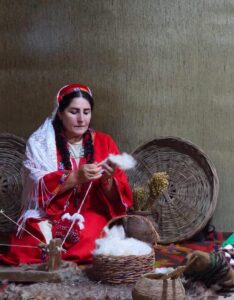
The economic consequences follow. Women in Tajikistan earn roughly 60% of what men earn.¹⁶ Women with no education or only primary schooling are three times less likely to be employed than women who complete secondary education.¹⁷
Tajikistan demonstrates that exclusion does not always arrive through a single dramatic policy or headline-making event. Sometimes it happens gradually, as girls encounter barrier after barrier at each stage of life. By adulthood, what appears to be a series of personal choices often reflects a much larger pattern of constrained opportunities.
What the Statistics Don’t Say
The statistics tell only part of the story. Enrollment is not the same as learning, and access is not the same as opportunity.
A girl counted as “in school” may be learning in a classroom without a trained teacher, without textbooks, or without a safe toilet that allows her to attend while menstruating. She may be walking a route her parents worry is unsafe or studying in a building that barely functions as a school. On paper, she is counted as enrolled. In reality, she is navigating obstacles that make learning harder, attendance less consistent, and success less likely. Years later, when she leaves school early, struggles to find work, or never reaches her full potential, few people connect those outcomes to the barriers that stood in her way from the beginning.
That gap, between access and attainment, is where so much human potential is lost. It is also where meaningful change happens. A safe classroom. A qualified teacher. A scholarship that removes a financial barrier. A community willing and able to support its school over the long term. These are the conditions that help turn enrollment into achievement.
Yet education alone is not enough. The benefits of learning are fully realized only when women have opportunities to apply their knowledge, skills, and ambitions. That is why efforts to expand education must be matched by efforts to expand economic opportunity.
When women can earn an income, build a business, or pursue a profession, education becomes more than a credential. It becomes agency, independence, and the ability to shape one’s own future.
The numbers are measured in trillions of dollars, but the loss itself is profoundly personal. It is experienced one girl at a time, one missed opportunity at a time, one unrealized future at a time.
And it will be reversed the same way: one classroom, one teacher, one student, one entrepreneur at a time. That belief lies at the heart of CAI’s work across Afghanistan, Pakistan, and Tajikistan, where lasting change begins not with global statistics, but with individual women and girls gaining the opportunity to learn, earn, lead, and determine their own futures.
1 World Bank, Missed Opportunities: The High Cost of Not Educating Girls (Wodon, Montenegro, Nguyen & Onagoruwa), 11 July 2018.
2 Ibid.
3 UNESCO and multiple UN sources, 2026.
4 UNICEF Innocenti, The Cost of Inaction on Girls’ Education and Women’s Labour Force Participation in Afghanistan, 28 April 2026.
5 Ibid.
6 UNICEF press release, 28 April 2026.
7 Ibid.
8 UN Women survey data on Afghan public opinion.
9 Save the Children, 19 June 2025; Civil Services Academy policy review, 2026.
10 Pakistan Economic Survey 2024–25.
11 Save the Children, 19 June 2025.
12 World Bank, Missed Opportunities, 2018.
13 Pakistan Bureau of Statistics. (2021). Labour Force Survey. Retrieved from https://www.pbs.gov.pk/docs/labour-force-survey-section/.
14 Tajikistan Ministry of Education data (2023), cited in Springer, 2024.
15 World Bank data (2021, 2023), cited in Springer, 2024.
16 World Bank, 2022, cited in Springer, 2024.
17 World Bank, Tajikistan Country Gender Assessment, 2021.