

By Rida
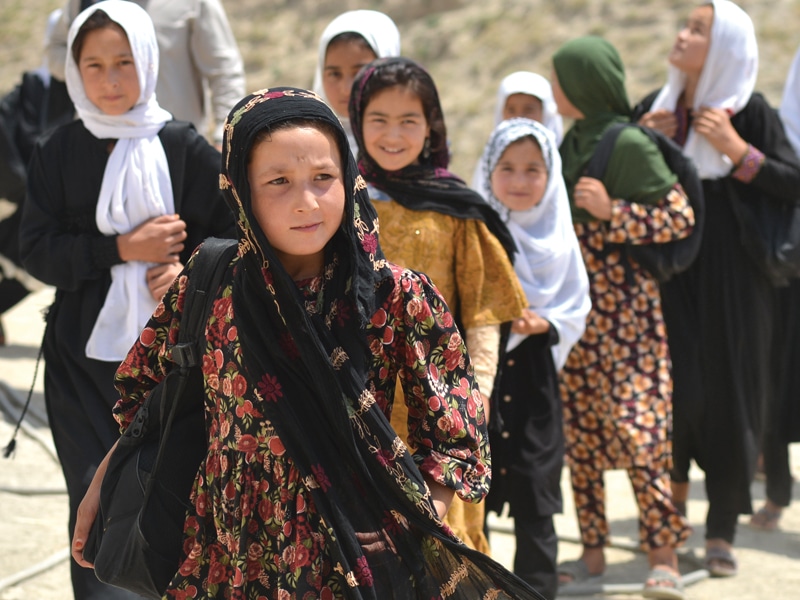
The barriers also fuel economic marginalization. In rural areas, only 9% of women report earning income. In cities, that figure is 17%, still far behind their male counterparts. In 2024, only 24.2% of women were in the workforce compared to 88.9% of men3. Moreover, new “virtue” laws ban women from traveling without a male guardian, mandate full face coverings, and prohibit them even from speaking in public4, essentially creating a culture of gender apartheid.
Despite this erasure, Afghan girls continue to show up: still learning, still teaching, still dreaming. And CAI is walking beside them every step of the way. As of mid-2025, CAI supports 171 community-based education (CBE) classes across multiple provinces, reaching over 5,000 students, many of whom have no other access to school. More than 280 trained female teachers are leading these classes in homes, mosques, and communal village spaces, bringing learning directly into the communities. Beyond primary education, over 170 Afghan women have received economic empowerment training in skills like mushroom cultivation, dairy farming, and jam-making, pathways that will allow them to earn income and thereby contribute financially to their households.
Until recently, school was a place that only 12-year-old Nazanin’s brothers knew because the closest government facility was far away and the terrain was too harsh for young children to travel on foot. “For little girls like me, it was impossible to walk to school,” she shared. Now, thanks to the opening of a CAI-sponsored community-based classroom in her village, which she attends regularly, she dreams of one day becoming a lawyer. “With school opening, my hope is coming true,” she told her teacher one morning.
Then there is Nasima, who dropped out of school when she began losing her eyesight. She cried, not due to her condition, but because she was missing out on the opportunity to learn. One year later, she’s back in class, thanks to CAI support. “The community school has given me another chance,” she said.
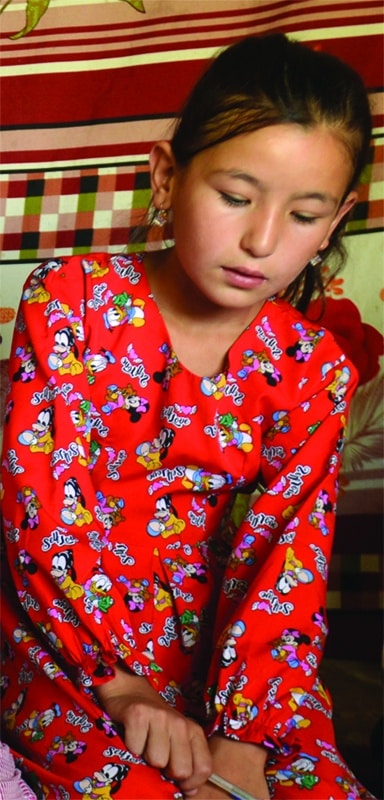
In Afghanistan, girls like Nazanin and Nasima are told they don’t belong in school. The fear, the heartache, the restrictions feel inhumane, but the silence around them is worse. Still, they choose courage. They reach, instinctively and relentlessly, for a return to normalcy, to learning, to opportunity, to dreams of the future. For many, education up to grade six is not a limit but a lifeline. Their fight is not just for themselves, but for a shared liberation. Afghanistan is not a lost cause; it’s a call to stand on the right side of history.
If we stop caring and acting, we unwittingly help the oppressors win. But if those young girls, stripped of all freedoms, can hold onto hope, then what excuse do we have to not be part of the resistance?
At CAI, our mission and vision are built upon decades of community-centered, community-informed work and trust-building. In a time when formal government systems have collapsed for Afghan girls, sustainability means something different. It means a continued, steady, dedicated presence. It means adapting our programs, again and again, to keep education alive.
We’ve reimagined classrooms, leaned on the local expertise of our Afghan partners, and found ways to protect learning spaces with the advent of every new restriction. We listen closely to teachers, families, and students and we make the choice to stay and help, even when so many other organizations have left, to show Afghan women that they are not forgotten. Not by us. Not by you. Not by anyone who believes in justice and the transformative power of education.