
Student in Pakistan

More than Education: Breaking down Menstrual Barriers

By Bella Pich

Imagine being a young girl growing up in a remote mountain village in Pakistan, with access to few resources.  While there is no government school located close enough to your village for you to reach on foot, you are overjoyed to be enrolled in a community school established by Central Asia Institute. There, you excel at your studies, particularly reading and writing, and hope to one day become a teacher yourself. But that all comes to a halt when you begin menstruating. Although menstruation is a natural part of life for every female, your school does not have private, gender-segregated bathrooms and you lack access to the hygiene and sanitary products needed to properly manage your period. To make matters worse, menstruation is viewed as a culturally taboo subject, entangled in complex social stigmas, so you are overwhelmed with embarrassment and shame about your body. Soon, the harsh reality sets in: your only option is to drop out of school. No more reading or writing. No more seeing your friends. And most painful of all, your dream of becoming a teacher slips from reach. Sadly, this situation is all too common in developing countries, where girls face numerous barriers to accessing education, including poverty, lack of government schools, and conservative social and cultural norms that confine them to domestic roles. Keeping girls enrolled in school can also be a challenge, with one of the most pervasive hidden barriers being menstruation. According to WaterAid, over 400 million children globally lack access to functioning or gender-segregated toilets1.In many cases, schoolgirls are the ones who suffer the most, especially in rural areas, having no clean, private spaces to change menstrual products, if those products are even available. Due to the social stigma surrounding menstruation, most girls are underprepared for and uneducated about their periods. As a result, many feel ashamed of their bodies and are unable to openly discuss the topic. This shame can negatively impact their mental health and lead to many missed school days—or even dropping out entirely, effectively stifling their future career plans. That’s why safe, segregated wash areas and comprehensive menstrual education for girls are so essential—not only for their emotional and physical well-being but also for the progress of entire communities.
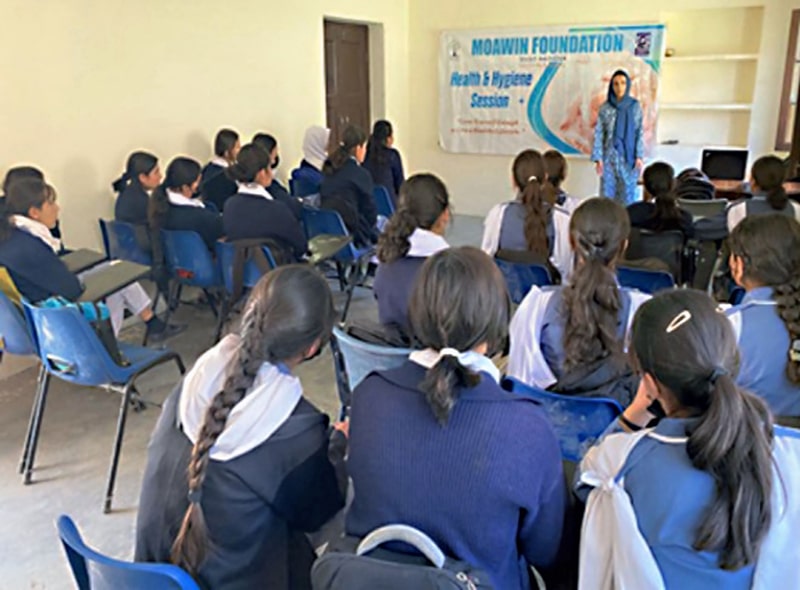
Attendees listen closely to their facilitator at a Health & Safety session in Baltistan, Pakistan.

But change is possible, even starting with just one bathroom and one trusted educator. In a remote, mountainous region in Gilgit-Baltistan, Pakistan, that change is already underway. For almost 30 years, Central Asia Institute has been committed to advancing education in this northern region, building schools and working with our local partner, Moawin Foundation, to support women in learning skills and earning income. Today, that mission continues with a growing focus on girls’ empowerment and safety through the introduction of gender-segregated washrooms and menstrual hygiene training.

Together with Moawin Foundation, CAI has supported the construction of gender-segregated bathrooms in 41 community schools across six areas of Gilgit-Baltistan. The new washrooms provide a safe, private, and respectful environment, making it easier for girls to manage their periods and attend school without fear or shame.  

Recognizing that infrastructure alone isn’t enough, CAI and Moawin Foundation also launched menstrual hygiene education sessions, which aim to help girls, their mothers, and teachers better understand and manage both their own and their daughters’ reproductive health with knowledge, confidence, and care. Led by women, the sessions demonstrate best practices in hygiene and sanitation while creating judgment-free spaces to learn and ask questions.

Participants are also provided with personal wellness items including soap, towels, sanitary pads and tampons, feminine wipes, and more. Since launching in 2023, the classes have been attended by a total of 613 women and girls, building awareness, self-assurance, and open dialogue around menstrual health.
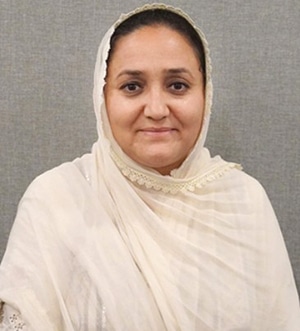
Naila, Program Manager for Moawin Foundation’s Baltistan team

“I am proudly leading the Health and Safety classes, and it’s been inspiring to witness a positive shift in attitudes toward menstrual hygiene. Teachers are now more open, informed, and better equipped to support young girls in their schools,” shares Naila, Program Manager for Moawin Foundation’s Baltistan team.

The progress seen in Pakistan is a powerful example of how targeted, community-led efforts can break long-standing taboos and create substantive change. This transformation isn’t just a result of infrastructure or education—it’s a direct reflection of the impact made possible by compassionate supporters like YOU. Thanks to the generosity of so many donors, hundreds of girls now have the opportunity to stay in school and pursue their dreams. When we invest in a girl’s health, we invest in her future, and in the future of her entire community.

SEARCH OUR BLOG ARCHIVE

Generic selectors
Exact matches only
Search in title
Search in content
Post Type Selectors
post