
Over the past few months, the Central Asia Institute (CAI) team has received numerous inquiries from donors wondering how global inflation, the conflict in the Middle East, and the political situation inside Afghanistan may be affecting CAI’s programs.
First, let me say thank you for your questions. We are always more than happy to share with you — our generous and caring donors and supporters — information about the programs you all make possible. This includes not only successes, but also the challenges we face every day working in a very tumultuous part of the world.
The Pressure
Let me start by addressing the conflict in the Middle East, and specifically, the Iran conflict. Thankfully, the attacks on Iran and in the region have not directly affected the countries where we work. Like elsewhere around the globe, however, volatility in global oil prices has fueled inflation in Afghanistan, Pakistan, and Tajikistan.
For example, fuel prices in Pakistan have surged nearly 26% from earlier this year, while diesel is up by more than 50%. Because the communities we serve in Pakistan’s mountainous north are remote and difficult to access, rising fuel costs and inflation have placed additional strain on both already vulnerable local populations and CAI’s programs, increasing the cost of operating schools and implementing other critical initiatives.
Unfortunately, this uptick comes at a time when raising funds is more competitive than ever, and CAI’s budget is already extremely tight.
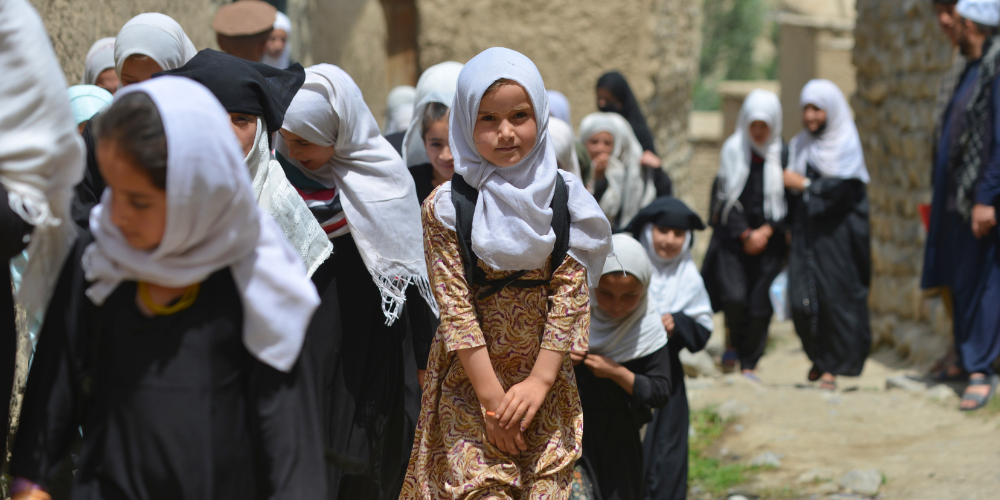
Looking at Afghanistan, CAI faces an even more complex set of political and economic challenges. Since the Taliban’s return to power, girls have been barred from attending school beyond sixth grade, and women have been excluded from universities and most forms of employment. At the same time, poverty and food insecurity have deepened dramatically. According to UNICEF, more than 62% of Afghans live in multidimensional poverty, underscoring the scale of the country’s humanitarian and economic challenge.
Sharp cuts in international humanitarian aid to Afghanistan have worsened the situation as well, leaving 17 million Afghans — one in three people — facing acute food insecurity.
The Perseverance
The good news is that despite these ongoing pressures, CAI’s programs are moving forward. Tens of thousands of students are continuing to learn and thrive at CAI-supported schools — including thousands of Afghan girls at the primary level — taught by well-trained teachers who continue to deliver quality education where education is never guaranteed.
And, despite these pressures, hundreds of women are still running small businesses, watching their household income grow, and feeling a sense of pride and purpose — many for the first time.
Since the very beginning of our work in northern Pakistan three decades ago, CAI has faced no shortage of challenges. Yet time and again, we have been sustained by the strength of our local partners, who persevere amid ongoing political and economic uncertainty, and by the communities we serve, whose enduring belief in the power of education and opportunity never falters. Their resilience and determination continue to define CAI’s success.
Resilience we owe, in large part, to your support and generosity. I can’t thank you enough for standing with us over the years.