
By Executive Director, Alice Thomas, Central Asia Institute
This op-ed originally appeared in the Bozeman Daily Chronicle, The Missoulian, Billings Gazette and Independent Record on August 12 and 13, 2026, and is republished here for the convenience of our readers.
As we approach the five-year anniversary of the Taliban’s return to power, I find myself heartbroken all over again.
Like many, I remember mid-August 2021 too vividly. Glued to the TV. Taliban fighters riding through Kabul in American Humvees. Afghan families crushed against the airport gates, desperate to get out. WhatsApp messages at all hours, trying to get friends and families onto a flight. Then the days after: not knowing what would become of the colleagues I’d worked beside for years, not knowing how I’d lead an organization with two decades in Afghanistan through whatever came next.
Today I feel a different fear. Yes, there is anger at the impunity and brutality with which the Taliban has ruled, especially their persecution of women and girls. But equally, I fear that America has already forgotten and quietly filed Afghanistan away as a lost cause.
I’ll leave it to experts to explain why forgetting our mistakes undermines sound American foreign policy and national security. But forgetting carries other costs.
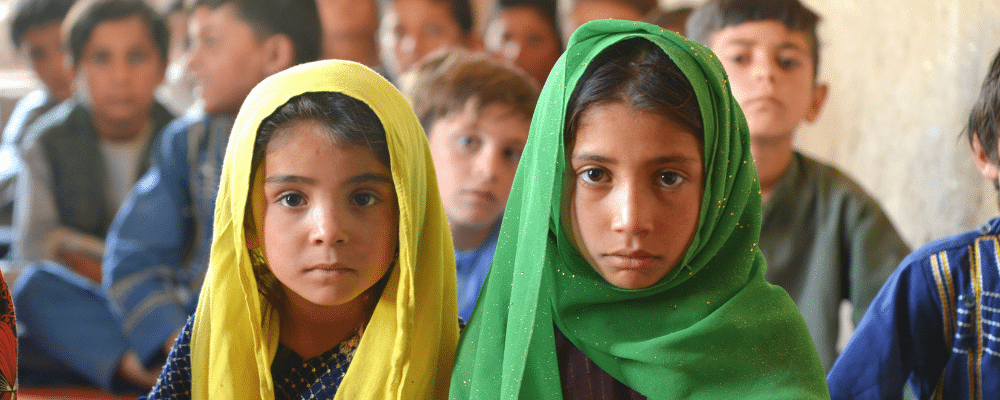
The first is failing to honor what was achieved. Where our military and political strategies failed, investments in the Afghan people—especially women and girls—left an indelible mark. A generation of Afghan girls went to school for the first time. Between 2001 and 2018, the number of Afghan girls in primary school rose from almost zero to 2.5 million, and literacy in Afghan women nearly doubled. Tens of thousands of Afghans—many of them women—trained as doctors, lawyers, teachers, humanitarians, and development professionals.
With our support, Afghans built a vision for their country—peaceful, prosperous, stable—and began to hope. That hope sustains many of them still, grounded in the conviction that the Taliban will not last forever. I see it every day in my Afghan colleagues, here and in Afghanistan.
Forgetting carries a second cost. Americans may have little power to remove the Taliban. But recent cuts to U.S. assistance inflict real harm on Afghan women and children without constraining the regime at all. Take education. Since 2021, donors have deliberately routed their support around the Taliban—community-based classes, scholarships for girls, teacher training outside the government system. Education Cannot Wait reports that the suspension of most foreign aid, alongside the bans on girls’ education, has reversed years of progress and left millions of Afghan children without safe, quality learning. These cuts are not abstractions. They are classrooms that close and teachers who lose their livelihoods. Cutting that support does not defund the Taliban. It deprives the Afghans whom the Taliban already neglects.
Which brings me to the last cost, and the one I want to leave you with. Forgetting helps keep the Taliban in power. As former diplomat Nigara Mirdad recently observed, the regime cannot sustain its current policies indefinitely—but international inattention has helped it last far longer than anyone expected, leaving Afghans unable to speak safely at home while the world abroad narrows its interest to security, migration and regional stability. Silence at home becomes permission abroad.
So I am not asking you for money. I am asking for something harder: your attention.
Read. Follow what’s happening in Afghanistan. Read Afghan journalists and Afghan-led outlets—many now report in exile at real risk. Their reporting only survives if someone reads it.
Say it out loud. Bring Afghanistan up at your church, your book club, your Rotary. Write a letter to this paper. Ask your member of Congress where they stand on Afghan aid and on the Afghan allies still waiting on visas we promised them. Silence from constituents reads as consent.
Welcome. If Afghan families have resettled near you—and in Montana, they have—show up. Help with a driver’s license, a job application, a first winter.
Refuse the story. When you hear that Afghanistan was a waste, that nothing changed—say what you know. Twenty years of educated women don’t disappear because a regime says so. Ask any Afghan mother teaching her daughter at her kitchen table right now.
The Taliban is betting the world stops watching. That’s the whole strategy. Being watched is the one thing they cannot control, and the one thing every American can give.
If you feel compelled to support Afghan women and girls’ education—make a donation today.